
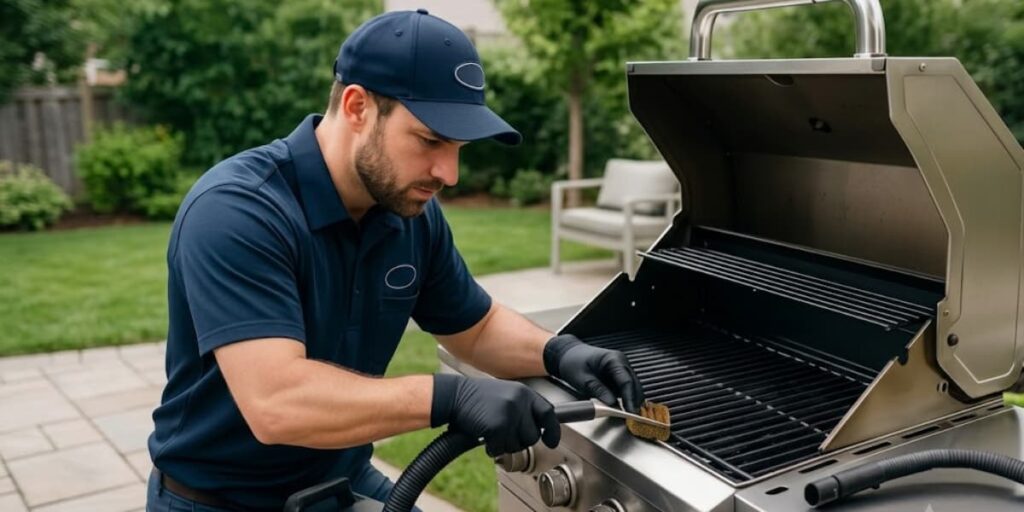
A barbecue grill does not fail all at once. It slowly loses performance through small issues like uneven flames, delayed ignition, and worn-out internal components. Most of these problems are tied to aging hardware and lack of timely servicing. In this guide, we break down how replacement parts for BBQ grills can bring your setup back to life and when to consider upgrades like Texas BBQ replacement parts, and why a mix of cleaning and repair is the real key to long-lasting performance.
The Real Reason Grills Lose Performance Over Time
Most grill owners assume performance drops suddenly. In reality, it is a slow process caused by grease buildup, heat stress, and natural wear on metal components.
When we visit homes across Santa Cruz County, we often find the same pattern. The grill still “works,” but it does not cook evenly anymore. One side burns food while the other stays undercooked. This is rarely just a cleaning issue.
Internal parts like burners and flame tamers gradually lose efficiency. Moisture exposure leads to rust, while repeated heating cycles weaken metal strength. Even ignition systems can become unreliable over time.
What surprises many people is that these problems are preventable. A combination of inspection and timely part replacement keeps grills operating like they did in the early years.
How Replacement Parts for BBQ Grills Improve Cooking Results
Using the right replacement parts for BBQ grills is often the difference between frustrating cookouts and consistent results.
We have seen grills completely transformed simply by replacing worn burners or damaged heat shields. The flame becomes stable again, heat spreads evenly, and cooking time becomes predictable.
Some of the most commonly replaced components include:
- Burners that produce weak or uneven flames
- Igniters that fail to spark consistently
- Cooking grates that no longer retain heat properly
- Grease trays that have warped or corroded
The important part is not just replacing something that looks damaged, but identifying what is affecting performance. A weak burner, for example, can sometimes look fine externally but still fail under pressure.
That is why proper inspection matters before choosing any replacement part.
When Texas BBQ Replacement Parts Become a Smart Upgrade
In recent years, many grill owners have shown interest in Texas BBQ replacement parts, especially when upgrading older systems.
These parts are known for handling high heat and long cooking sessions, which makes them popular among people who enjoy slow cooked meats and weekend gatherings. The design often focuses on durability and consistent flame output.
We have installed these components in several grill systems where users wanted better heat retention and improved searing performance. The difference is noticeable in thicker cuts of meat and long cook cycles.
However, upgrades should always be done carefully. Not every grill is designed for high output components. Gas flow, burner spacing, and ventilation must all be checked before making the switch.
When done correctly, the upgrade improves cooking stability and reduces the need for frequent maintenance.
Repair vs Replace: What We See in Real Service Calls
One of the most common questions we get during service visits is whether a part should be repaired or replaced.
In most cases, replacement is the safer and more reliable option when structural damage is present. Metal fatigue, deep rust, or cracked burners cannot be restored fully through cleaning alone.
On the other hand, minor issues like surface grease buildup or loose fittings can often be fixed without replacing parts.
Our approach always starts with a full system check. We look at:
- Heat consistency across burners
- Ignition response time
- Gas flow stability
- Internal grease accumulation
- Structural condition of key components
This helps us decide whether a grill needs a simple tune up or a full part replacement.
Many customers are surprised to learn that a small part change can restore nearly 80 percent of lost performance.
A Closer Look at Real Grill Care in Practice
Working in outdoor grill servicing for years has shown us one important truth. A grill performs best when cleaning and repair work together.
A clean grill with damaged parts still fails. A fully repaired grill that is not cleaned will quickly lose efficiency again.
That is why we focus on combining deep cleaning, inspection, and targeted replacement in a single service visit.
Central Coast BBQ Cleaners has built its service approach around this idea. Instead of treating symptoms, the focus is on restoring the entire system so the grill performs reliably through the season.
From grease removal to part tuning, each step plays a role in extending grill life and improving safety during cooking.
FAQ:
1. How do I know I need replacement parts for BBQ grills?
If your grill has uneven flames, slow ignition, or inconsistent heat, it is often a sign that internal parts are wearing out and need inspection.
2. Are replacement parts expensive compared to buying a new grill?
In most cases, replacing key components is much more cost effective than buying a new grill, especially for mid range and high quality models.
3. What makes Texas BBQ replacement parts popular for upgrades?
They are designed for higher heat endurance and longer cooking sessions, which improves performance for heavy grilling use.
4. How often should grill parts be checked?
A yearly inspection is recommended, especially before peak grilling seasons, to avoid unexpected failures during use.
5. Can cleaning alone fix performance issues?
Cleaning helps improve efficiency, but if parts are damaged or worn out, replacement is necessary for full restoration.
A grill is not just a cooking tool, it is part of how we gather and share meals. Keeping it in good shape with the right care and timely upgrades ensures every cookout feels effortless and enjoyable.